Near-seamless finish
Wide roll format minimises joins in kitchens and bathrooms.
Practical, easy-clean flooring with the right preparation.
Vinyl flooring has been a trusted choice for kitchens, bathrooms, utility rooms, and commercial spaces for decades — and modern vinyl is a significant improvement on the thin, easily-damaged products of years past. Level Floor Fitting supplies and installs sheet vinyl and vinyl plank across Scarborough and the surrounding area.
Sheet vinyl comes on a roll and is cut to the room, with fitting and adhesive chosen according to the manufacturer guidance. Larger or irregular rooms may need joins, and wet areas require appropriate edges and seals. Cushion-backed products offer comfort underfoot and a range of tile, stone and wood-effect designs.
Vinyl plank is a format of luxury vinyl flooring, available in click or glue-down systems rather than a separate guaranteed cheaper alternative to LVT. The wear specification, temperature range and installation instructions determine suitability. Garages, unheated outbuildings and specialist commercial rooms should not be assumed suitable for ordinary domestic vinyl.
For business premises, discuss traffic, cleaning, wet or greasy conditions and any project requirements before choosing a product. A commercial kitchen or wet room may require a specialist safety flooring specification, compatible joints and edge details rather than ordinary domestic vinyl. Product suitability and the installation scope must be checked before work is agreed; thickness or a textured appearance alone does not demonstrate slip performance.
Vinyl brands we work with: Furlong, Tarkett, Lifestyle Floors. Explore practical sheet vinyl designs for kitchens, bathrooms and other rooms, with the base and fitting method checked first. For supply-and-fit, ask about current ranges and samples. If you already have your flooring, send Dan its brand and product details for fitting-only advice. Availability and suitability are checked before quoting.
Wide roll format minimises joins in kitchens and bathrooms.
Suitable sheet vinyl specifications for kitchens, bathrooms and utility spaces.
Softer and quieter underfoot than hard flooring alternatives.
Discuss wear, cleaning and slip requirements for the actual space.
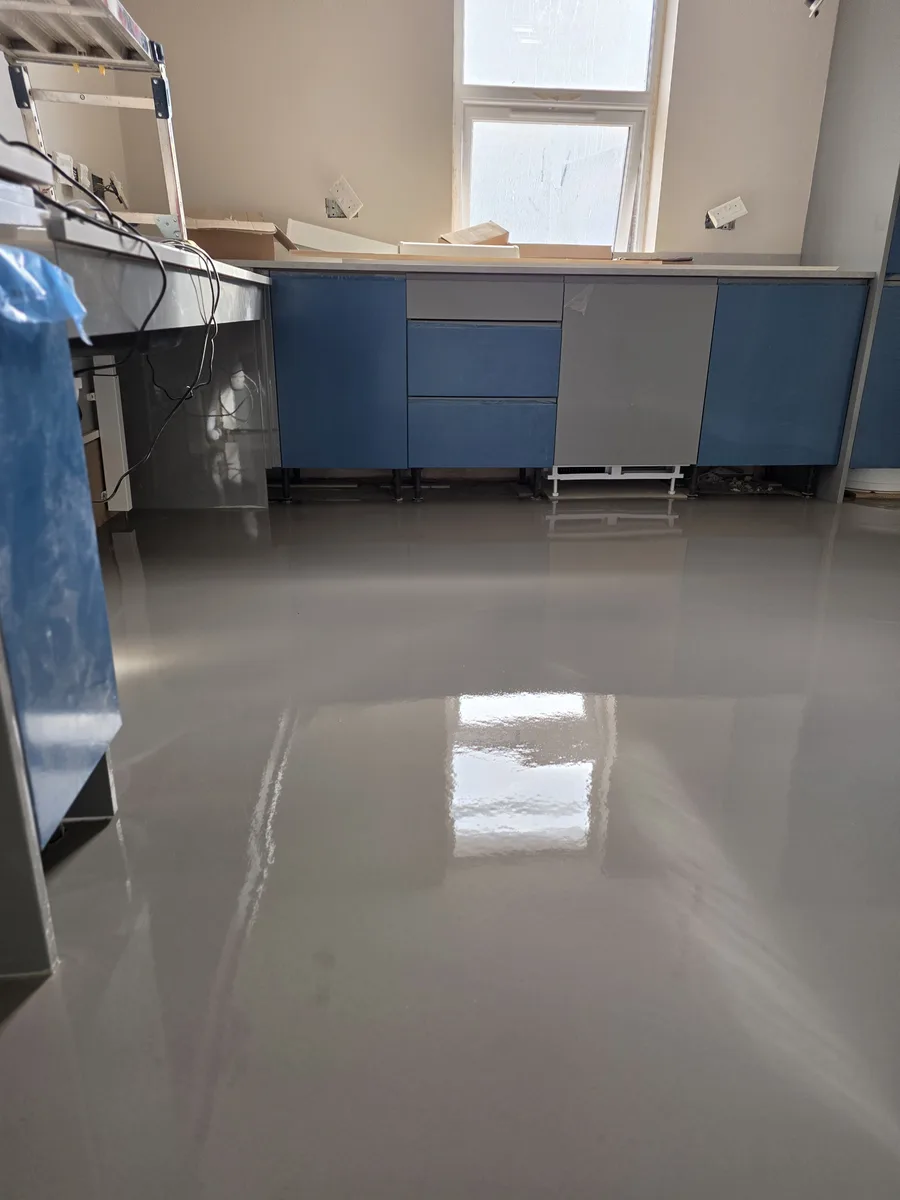
Separate examples from Level Floor Fitting’s wider gallery, not a before-and-after pair.
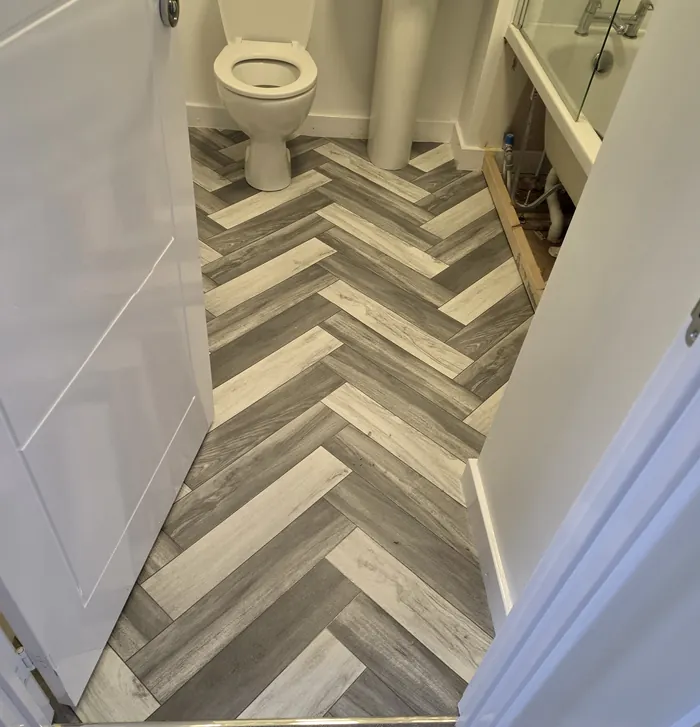
Sheet vinyl is supplied on a roll and cut to the room, whereas LVT uses separate planks or tiles in glue-down or click formats. A roll can reduce joins, but room shape, roll width and pattern alignment still affect the cutting plan. Cushion-backed sheet products may feel different underfoot from bonded tiles; their wear and room suitability need comparison rather than assuming one is always cheaper or tougher. The proposed base, water exposure, fitting method and finishing details should be considered alongside appearance before Dan measures and quotes.
A smooth, stable and suitably dry surface is important because ridges, board joints and grout lines can show through a resilient sheet. Existing tiles need soundness, contamination and bond checks before any compatible priming and smoothing system is applied. Timber may require a suitable flooring-grade overlay or another approved preparation method. The product determines the tolerances; there is no single grout-depth rule that clears every installation. Include photographs and tell Dan about loose tiles, movement or old adhesive so retaining the base can be assessed before the final plan is agreed.
No. A domestic bathroom can use a product approved for that room with the specified edge and joint treatment. A continuously wet shower room may require a specialist safety sheet, appropriate welding or joint details, drainage and a waterproofing system. Grip must be suitable for expected barefoot or shod use, not inferred from an attractive texture. Commercial kitchens have their own traffic, contamination and hygiene requirements. Explain the room’s actual conditions so the specification can be checked; ordinary decorative vinyl is not a universal wet-room or safety solution.
Room dimensions, alcoves and the roll’s width determine whether a single sheet is practical. Pattern direction and matching also affect quantities and where a join can sit. The product and conditions determine full bonding, any permitted alternative fixing, seam treatment and finishing around fixtures. Do not assume every vinyl can be loose-laid or that all joins use the same seal. Doors, appliances and thresholds need clearance for the finished height. Measuring before ordering helps avoid unnecessary joins or insufficient material, and the quote should identify preparation and finishing as well as the sheet.
Only where the exact product, adhesive and heating or temperature conditions are compatible. Underfloor heating instructions can set a maximum operating temperature and a shutdown/restart sequence; a new heated base also needs commissioning and moisture checks. An unheated garage, outbuilding or strongly sunlit room may expose flooring to conditions outside its rating. Domestic vinyl should not be assumed suitable simply because it resists spills. Share the room’s use, heating type and product details so Dan can check the proposed installation rather than relying on a general vinyl label.
Keep grit off the surface, use protectors and mats approved for the range, and follow its cleaner and water instructions. Rubber-backed mats, strong chemicals and dragged appliances can cause problems on some products, so check before use. A cushion-backed sheet can mark under concentrated loads; moving heavy items should be planned carefully rather than sliding them across the finished floor. Do not assume steam cleaning is permitted. Cuts and tears may be repairable in some circumstances, but patch visibility and the base condition must be assessed before a repair or colour match can be promised.
State footfall, wet or greasy conditions, wheeled equipment, cleaning requirements and any project specification. The selected wear and slip characteristics must suit those conditions, with appropriate adhesives, joints and edges where required. Preparation, uplift, disposal, furniture or appliance movement and finishing should be expressly agreed. Access hours alone do not set the duration: moisture treatment, smoothing and adhesive curing can control when the area returns to service. Ask Dan to explain the work stages and maintenance expectations before you arrange a reopening or assume the room can be used immediately after fitting.
Call Dan directly or email the details of your room, flooring and location.