Flooring questions, answered.
Read practical answers about fitting, samples, preparation, service areas and what to expect from a quote.
Practical planning answers on preparation, materials, measuring and what to expect on fitting day.
Whether a floor suits your room depends on the exact product’s instructions and an on-site assessment of moisture, heating, the base and room use. Contact Dan with photographs and project details to discuss the specification.
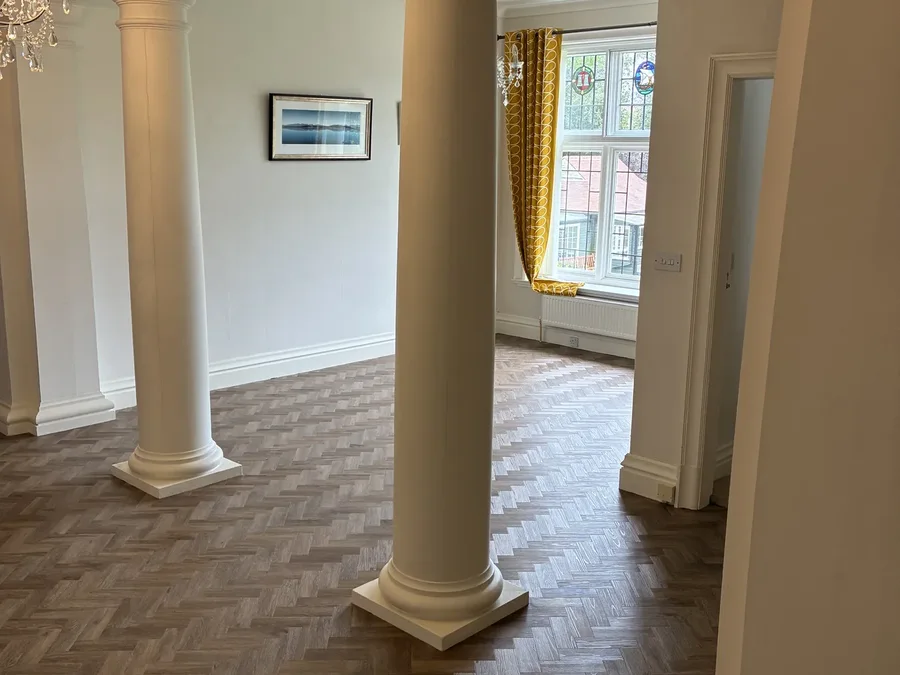
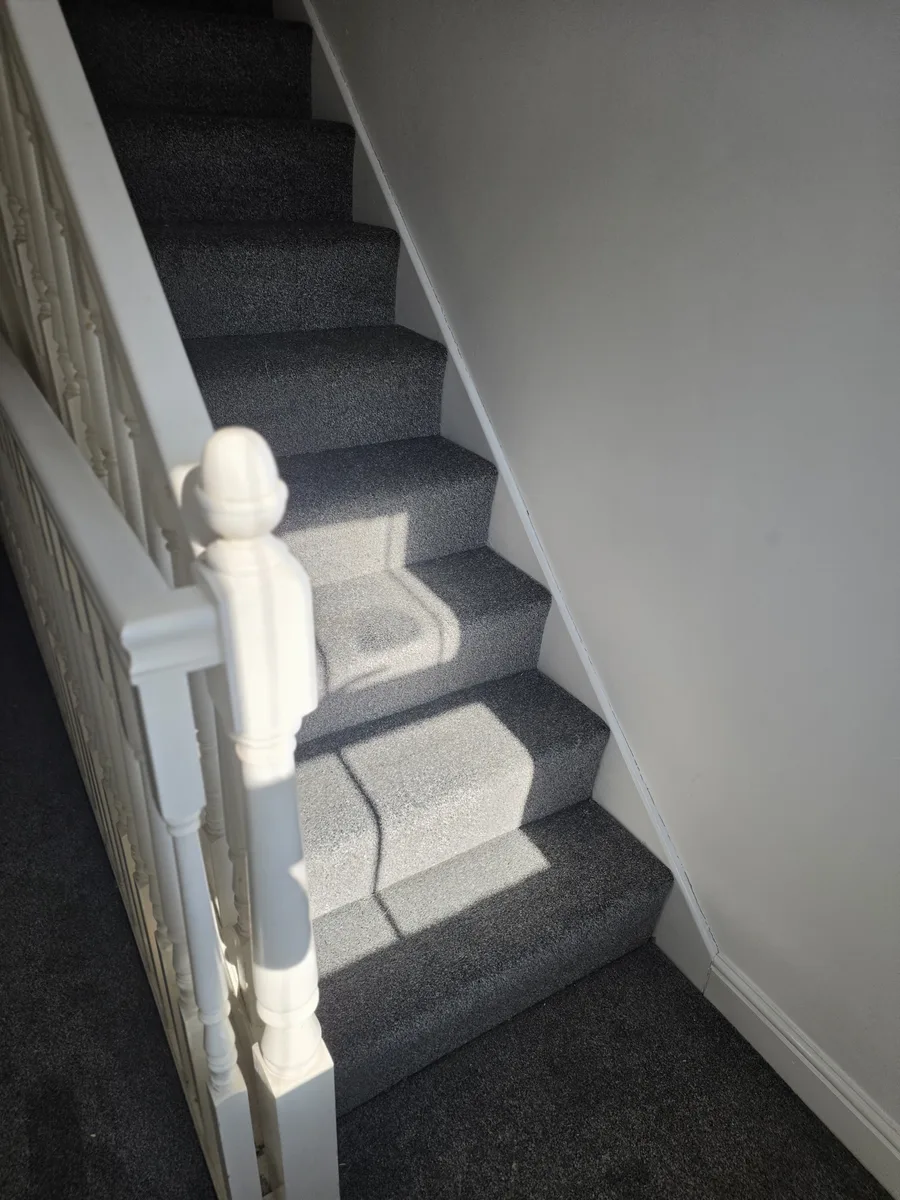
Flooring examples from our project gallery
Separate examples from Level Floor Fitting’s wider gallery, not a before-and-after pair.
Keep planning your floor
- Explore flooring services
- Compare brands and materials
- Ask Dan a question
- Print the fitting-day checklist
- Abingdon: carpet construction, underlay, pets and heating
- F. Ball: subfloor assessment, moisture and preparation
- Karndean: UK rigid-core installation guidance
- Quick-Step: laminate installation and underlay
- Polyflor: wet-room safety flooring considerations
Common questions
How do I choose between carpet, LVT, sheet vinyl and laminate?
Start with how the room is used, not just a colour sample. Carpet and suitable underlay bring softness to bedrooms, sitting rooms and stairs. LVT offers individual wood- or stone-effect tiles and planks, while sheet vinyl is cut from a roll and can reduce the number of joins. Laminate gives a wood-look surface but its water suitability depends on the particular range. Consider cleaning, pets, sound, heating, doorway heights and the existing base together. Dan can compare suitable samples and explain the preparation each option needs before you order.
What should a supply-and-fit quote include, and why do prices vary?
Ask for the product and quantity, fitting, necessary preparation, underlay or adhesive, thresholds and finishing to be clearly identified. Uplift, disposal, moving larger furniture and door adjustments should be discussed rather than assumed included. Room shape, stairs, herringbone cutting, floor condition and access can change the work even when floor areas are similar. Photographs and approximate sizes help start the conversation, but an exposed-floor assessment may be needed to confirm the preparation. Level Floor Fitting also offers fitting-only for suitable flooring you have sourced; send its exact product details before buying accessories.
What is the practical difference between glue-down LVT and click flooring?
Glue-down LVT is bonded to an appropriately prepared base using a compatible adhesive. It needs a smooth surface so joints, ridges and defects do not show through. Click LVT connects at the joints and normally floats, with the expansion spaces and room-size limits required by its manufacturer. Some click products have an attached backing; adding another underlay without approval can damage the joints. Neither system avoids checks for stability, flatness and moisture. Product specification, floor heights, room use and layout determine the better choice, rather than a blanket rule that one is always quicker or stronger.
When does a floor need moisture testing or a damp-proof membrane?
A concrete or screed surface that looks dry can still contain enough moisture to affect flooring or adhesive. The assessment should use an appropriate test method and the limits for the chosen floor and preparation system; a quick indicative reading is not a universal clearance to fit. An approved surface damp-proof membrane or moisture-control system may be appropriate when results exceed the relevant limit, but leaks, structural damp and unsuitable substrates need investigation first. Smoothing compound alone is not waterproofing. In older buildings, discuss existing membranes and ventilation before sealing a floor.
Can new flooring be fitted over existing ceramic tiles or floorboards?
Sometimes, but only after checking the base rather than hiding it. Tiles must be firmly bonded, clean and compatible with the proposed primer and preparation; loose or hollow areas, contamination and moisture need attention. Grout lines can show through thin resilient flooring, so a suitable smoothing system may be necessary. Timber floors need checks for movement, fixings, ventilation and a product-approved overlay or preparation method. The extra height must also work at doors, appliances and adjacent rooms. Photographs help, but whether to retain or remove the existing surface is a site-survey decision.
Can my flooring be used with underfloor heating?
Check the exact flooring, adhesive or underlay and the heating-system instructions together. Carpet and underlay need a suitable combined thermal resistance; a thick, insulating combination may restrict heat output. LVT and laminate can be compatible, but the product must permit your system and specify surface-temperature limits, any acclimatisation and the heating shutdown/restart procedure. New heated screeds also need the correct commissioning and moisture checks. Send the heating details and product name before booking: there is no single temperature, board thickness or tog limit that can safely be applied to every product and system.
What makes herringbone fitting different from straight plank?
Herringbone needs careful setting-out so the centre line, sight lines, doorway transitions and perimeter cuts work together. Room shape, borders and the chosen block size affect cutting waste and fitting time. Glue-down and click herringbone are different systems, and not every straight plank product can be used as a herringbone block. Discuss whether the pattern should run through adjoining rooms and how it will finish at thresholds before materials are ordered. Dan can assess the base and layout, then explain the specification and labour rather than applying a straight-plank estimate to a patterned floor.
What should households with pets or children look for?
Compare the product’s wear suitability and cleaning instructions, not just a label such as pet-friendly. On carpet, ask about pile construction, snagging from claws, stain treatment and the permitted way to clean accidents; bleach is only appropriate where that specific carpet manufacturer allows it. For hard floors, grit-catching mats, furniture protection and prompt spill removal help reduce damage. LVT and laminate can still scratch or dent, and standing water can reach joints or edges. Tell Dan about the room, traffic and pets so samples can be narrowed down without promising a scratch-proof or stain-proof floor.
Is water-resistant flooring safe for a bathroom or wet room?
A water-resistant board or waterproof tile does not make the whole room watertight, nor does it prove slip resistance. Bathrooms need a product approved for that use, a sound dry base and the correct edge and joint treatment. A shower wet room can require specialist safety sheet flooring, welded seams, drainage details and a separate waterproofing system; ordinary domestic LVT or vinyl should not be assumed suitable. The surface must suit barefoot or shod use and expected contaminants. Cleaning and maintenance also affect grip. Explain the room’s actual wet use before a product or fitting method is agreed.
How are carpet, underlay and fitting chosen for stairs?
The carpet must be rated for stairs and suit the bends, winders, nosings and landing. Fibre alone does not decide suitability: pile construction, backing, wear classification and the manufacturer’s fitting requirements matter too. A dense, suitable underlay supports the carpet without making the step edge excessively soft; existing gripper and thresholds also need checking. A full-width carpet and a runner have different finishing details. Send photographs of the whole staircase, turns and landings so measuring, seam positions and fixing can be considered before ordering. Do not assume a bedroom carpet or old underlay will perform equally well on steps.
What order should decorating, floor preparation and fitting follow?
Agree the sequence with the other trades before setting the fitting date. Wet building work, leaks and structural repairs should be resolved; new substrates may need drying and heating commissioning. Flooring products may need conditioning in the room, then uplift, repairs, moisture control and smoothing take place in the order required by the selected system. Major decorating is usually easier before the finished floor, with final touch-ups afterwards. Kitchen units, skirtings and fixed furniture need a plan that suits bonded or floating flooring. Include adhesive curing and any restrictions on walking, furniture or washing before arranging to use the rooms again.
How long will the job take and when can I use the room?
There is no reliable whole-house or per-room promise without seeing the work. A clear room with straightforward carpet fitting is a different job from stairs, multiple thresholds or herringbone LVT over a floor needing repair. Drying, moisture-control products, smoothing compound, adhesive and acclimatisation can determine the programme more than floor area. Tell Dan about moving-in dates, holiday-let changeovers and access for other trades. Ask for the expected preparation, fitting and return-to-use stages in the quote, including when furniture and normal cleaning can resume. Walkable does not necessarily mean ready for the final covering or heavy use.
What furniture and old flooring should I remove before the visit?
Clear breakables, personal items and smaller furniture where practical, and explain any beds, wardrobes, appliances or heavy items that cannot be moved. Agree what assistance is possible and whether rooms can be completed in stages before booking; it is not automatically included. Existing flooring uplift and disposal also need an agreed scope and price. Do not scrape or sand suspect old tiles or black adhesive without identifying the material first. Photographs of the floor and access help plan the visit, but extra preparation can only be confirmed once concealed layers or damage are safely exposed.
Can you repair a damaged floor or match an existing product?
Send a close-up of the damage, a wider room photograph and any product name, batch label or spare pieces. A local repair may be possible, but the fitting system, damage to the base and access to the affected piece determine the method. A bonded LVT piece and a click board require different approaches; some click repairs involve lifting boards from an edge. Carpet damage, seam problems and loose gripper also need assessment rather than a guaranteed patch. Older ranges can be discontinued and colour can change with wear or light, so a new piece may not match invisibly.
How should I clean and protect my new floor?
Keep the care instructions for the actual range. Remove loose grit regularly, use suitable mats and furniture protectors, and clean spills promptly. Carpet needs vacuuming and the stain treatment its fibre and backing permit; do not apply bleach to a carpet just because another range allows it. For LVT, vinyl and laminate, use the approved cleaner and amount of water, avoid abrasive products, and do not assume a steam mop is allowed. Allow the installation’s curing period before washing or moving heavy items. Maintenance affects appearance and slip performance, particularly in business premises.
How is flooring for a shop, office or hospitality space specified?
Explain footfall, wheeled furniture, opening hours, cleaning chemicals and whether the room can become wet or greasy. Domestic suitability alone does not demonstrate that a product will work in a commercial environment. The specification may need an appropriate wear class, slip performance, seams, adhesive and maintenance regime. Danfloor is among the specialist carpet brands listed on this site; commercial LVT and vinyl options also depend on the particular range. Share any requirements from your business or project team so suitability and installation scope can be checked before agreeing work. Do not substitute ordinary decorative flooring for specialist safety flooring.
Which towns and villages are covered, and how do I arrange a survey?
Level Floor Fitting is based in Scarborough and travels across the existing North Yorkshire and East Riding service area, including Whitby, Filey, Bridlington, Pickering, Malton, Helmsley, Driffield and Beverley. The local guides list nearby villages; there are no separate branches implied by those pages. Send the postcode, room use, approximate dimensions, photographs and whether you want supply-and-fit or fitting-only. Mention stairs, parking, access and your preferred dates. These details help Dan discuss a suitable visit and quote; coverage, availability and the final preparation are agreed for the individual project.
Is laminate the same as engineered wood, and do you offer both?
No. Laminate generally uses a printed decorative surface over a manufactured core, whereas engineered wood has a real timber surface over a layered construction. They have different moisture, expansion, heating and maintenance requirements; sanding or refinishing cannot be assumed for either product. The advertised services here are carpet, LVT, laminate, vinyl and subfloor preparation. If you are considering engineered wood, ask Dan to confirm availability and the proposed product and installation scope before ordering, including the base, heating, room conditions and manufacturer’s installation requirements.
Get a free flooring quote
Call Dan directly or email the details of your room, flooring and location.